Do you follow the headlines but still feel unsure about what “luxury” really means in Summerlin? You are not alone. The top of the market moves differently, and small data samples can make stats look noisy. In this guide, you will learn how to define the luxury tier in Summerlin, which metrics matter most, what truly drives demand, and how to use timing signals to act with confidence. Let’s dive in.
What counts as luxury in Summerlin
Luxury has two accepted definitions in Summerlin. You can use a percentile approach that looks at the top 5 to 10 percent of recent sales, or a price threshold that reflects local practice. In Summerlin, many participants treat homes at or above roughly $1 million as entering the luxury tier, with meaningful sub‑segments above about $1.5 million to $3 million and an ultra‑luxury segment at the top. Choose one definition and state it clearly in your analysis.
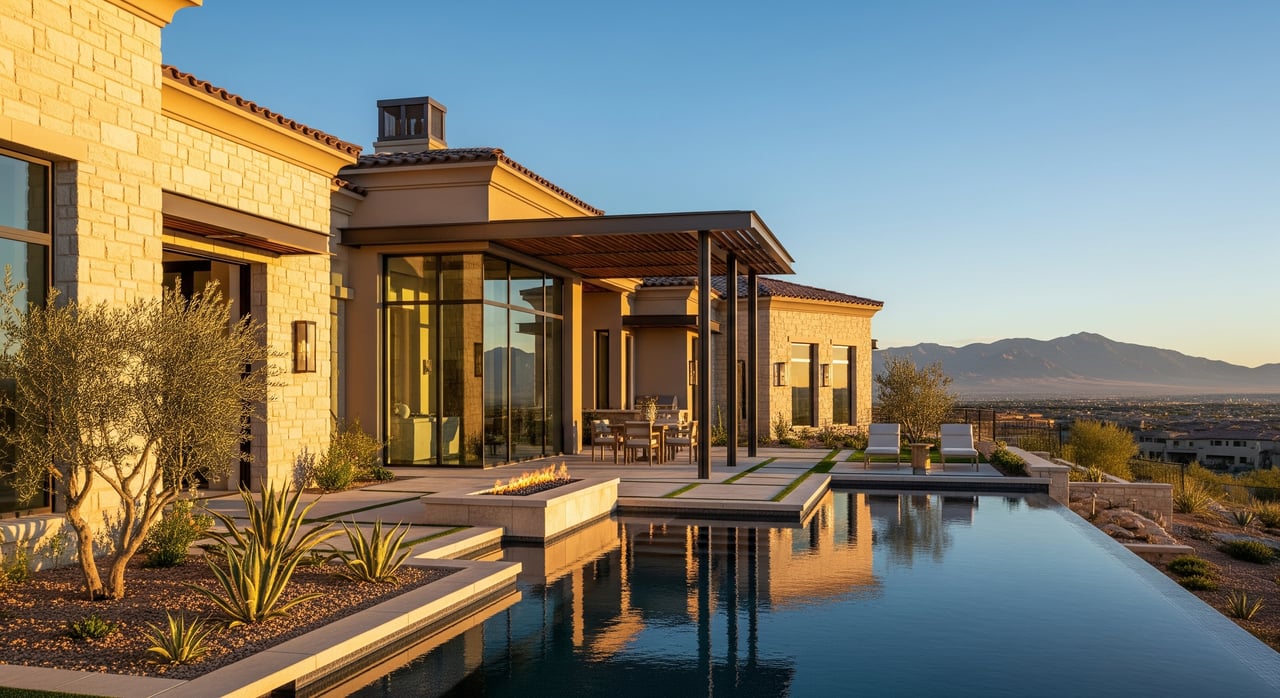
Luxury in Summerlin includes high-end single-family homes in gated enclaves, golf-course estates, custom builds, and a limited set of high-end townhomes or condos in prime locations. Price is only part of the story. Lot size, mountain or Strip views, pools, premium finishes, and privacy features signal true luxury value.
Set your data scope the right way
Define the study area using the Summerlin master-plan map or MLS neighborhood boundaries rather than ZIP codes. This keeps your comps relevant and reduces noise from nearby submarkets. When you report numbers, be clear about the boundary and timeframe, such as “Summerlin MLS area, past 12 months.”
Because the luxury tier has fewer closed sales, individual transactions can skew results. Use rolling 3 to 6 month averages to smooth volatility, and always state your sample size. If you have fewer than 10 sales in a period, expand the timeframe until the trend is more reliable.
Essential metrics to track
- Active listings: how many luxury homes are on the market right now.
- New listings: the monthly flow of fresh inventory.
- Pending or under contract: a leading indicator of near-term closings.
- Closed sales: actual demand, measured by completed transactions.
- Median vs average sale price: use the median to reduce outlier impact. Very large estates can pull the average up.
- Price per square foot: helpful for comparisons, but adjust for lot size, pool, and view premiums.
- Days on market (DOM): shows buyer activity and pricing pressure. Median DOM reduces the influence of outliers.
- Sale-to-list price ratio: above 100 percent suggests bidding pressure. Below about 98 percent points to softer negotiation.
- Months of supply (MOS): Active listings divided by closed sales per month. As a guide, MOS under 4 often favors sellers, 4 to 6 is more balanced, over 6 often favors buyers.
- Absorption rate: Closed sales per month divided by active listings. Higher absorption means stronger demand.
- Pending-to-active ratio: A quick read on demand versus supply.
Read trends without the noise
Use rolling averages for 3 to 6 months to reduce single-sale swings in luxury data. Compare the same month year over year to separate seasonal patterns from real change. Watch direction and momentum together: rising MOS, rising DOM, and a falling sale-to-list price ratio often signal softening.
Do not rely on median price alone. Track price reductions and the share of listings with changes. Understand that off-market and private sales are more common in luxury, which can bias public stats. Separate new construction from resale when you review inventory and DOM since build timelines and marketing cycles differ.
Price bands and pace in Summerlin luxury
- Entry-level luxury: commonly starts near the local “luxury” threshold, often around $1 million. These are larger homes with high-end finishes and modern layouts.
- Mid-luxury: roughly $1.5 million to $3 million. Expect larger lots, stronger upgrades, view premiums, and guarded or gated settings.
- Ultra-luxury: custom architecture, prime views, or exceptional lots. Sample sizes are smallest here, so liquidity varies the most.
Turnover patterns change by tier. Mid-tier luxury often moves faster than ultra-luxury, which has a smaller buyer pool and higher DOM. New-construction releases can temporarily increase supply and shift short-term MOS. Seasonally, Spring is active and late fall to winter is quieter, but Las Vegas’s year-round economy supports steady engagement even in hotter months.
What drives demand in Summerlin
- Location and views: proximity to parks, trails, and championship golf, plus mountain or Strip views, can justify premiums.
- Master-planned amenities: community parks, shopping, trails, and well-planned infrastructure support value.
- Schools: access to public and private school options is important for many family buyers.
- Security and privacy: gated and guarded communities, plus privacy-oriented lots, are prized.
- Outdoor living: pools, usable yard space, and outdoor kitchens matter in the Nevada climate.
- Builder reputation: recognized luxury builders and high-end finishes help support pricing.
Macro factors also shape demand. Interest rates and jumbo loan terms affect buying power. The local job base in Las Vegas and broader migration patterns, combined with Nevada’s no state income tax, have historically supported demand. HOA covenants and local rules can limit short-term rentals, which is important for investors to verify.
Timing signals for buyers and sellers
- Signs that can favor sellers: months of supply is trending lower, sale-to-list ratio near or above 100 percent, shorter median DOM, and frequent over-asking results in your specific neighborhood.
- Signs that can favor buyers: MOS above 6, more price reductions, rising median DOM, sale-to-list ratios drifting lower, and longer time-to-close for financed buyers.
- Mixed or neutral signals: small changes in MOS with flat median price and small sample sizes. In this case, lean on neighborhood-level comps and off-market intel.
Smart pricing and marketing for sellers
Price to the niche, not the broad average. Your best comp set is within the same neighborhood, with similar lot type, views, and finishes. Be transparent about the sample size and show adjustments for view premiums, pools, and upgrades so buyers and appraisers see the logic.
Expect longer marketing periods at the very top of the market. Use targeted outreach, broker previews, and private showings to reach the right buyers. High-caliber presentation, including staging, professional photography, virtual tours, and dedicated property microsites, helps capture attention and support price.
Buyer and investor playbook
Decide early whether you will use cash or jumbo financing and get terms set. For unique properties, plan for appraisal and inspection strategies that respect custom features and material upgrades. Understand HOA and community rules, especially for rental use, since many luxury neighborhoods have restrictions on short-term rentals.
Model hold costs and liquidity risk. Larger properties often carry higher maintenance and ownership costs, and exit timelines can be longer during downturns. For investors, remember that Summerlin is primarily owner-occupied, and that long-term potential depends on neighborhood rules and local demand.
A simple monitoring plan
- Weekly: track active listings, pendings, and notable price reductions to catch turning points early.
- Monthly: review median price, DOM, sale-to-list ratio, MOS, and closed sales in your chosen luxury band.
- Quarterly: go deeper into comps by price band, absorption rates, builder inventory, and macroeconomic context.
For data, rely on the local MLS for closed sales and live inventory. Las Vegas Realtors reports, Clark County Recorder and Assessor records, and community or HOA resources add clarity. Public trend tools can offer context, but confirm key figures with MLS data. Always note the boundary, timeframe, whether you used median or mean, and your sample size.
How Campbell Luxury Group helps
You deserve more than a market snapshot. You need a clear plan. Campbell Luxury Group pairs a boutique, hands-on approach with data-driven advice tailored to Summerlin’s luxury tiers. That means refined pricing strategy, professional presentation, targeted outreach, and negotiation-first advocacy for sellers, plus curated search, neighborhood intelligence, and decisive representation for buyers and investors.
If you want a private, metrics-based read on your home or a focused acquisition plan in Summerlin, let’s talk. Start a confidential conversation with Deryck Campbell to get a plan you can trust.
FAQs
What is the best way to define “luxury” in Summerlin?
- Use either a percentile definition that targets the top 5 to 10 percent of sales or a clear threshold around $1 million, then state your choice and timeframe.
Which metrics matter most for Summerlin luxury buyers and sellers?
- Focus on months of supply, sale-to-list ratio, median DOM, median price, price per square foot with adjustments, and the pending-to-active ratio.
How long do Summerlin luxury homes usually take to sell?
- Luxury DOM is typically longer than the broader market due to a smaller buyer pool; look at median DOM and cumulative DOM for a truer timeline.
How should I use price per square foot in luxury comps?
- Treat it as a starting point and adjust for lot size, views, pools, finishes, and builder quality to avoid misleading conclusions.
Are short-term rentals allowed in Summerlin luxury neighborhoods?
- Many communities restrict short-term rentals through HOA rules or local regulations, so verify covenants and county guidance before buying.
What signals suggest it is a good time to list a Summerlin luxury home?
- Falling months of supply, shorter median DOM, and sale-to-list ratios near or above 100 percent are signs that sellers may have an edge.
How do interest rates affect the Summerlin luxury segment?
- Luxury purchases often involve cash or jumbo loans, so changes in jumbo rates and lending guidelines can influence demand and negotiation power.
Where can I find reliable Summerlin luxury data?
- The MLS is your primary source for closed sales and inventory, supported by Las Vegas Realtors reports, county records, and community resources.